



Your Offshore Guide to Cruising with Kids
December 7, 2019 | Diane KohlhaasYour Offshore Yacht Guide to Cruising with Kids
“The sea is the last free place on earth.” ~ Humphrey Bogart
If you’re like most of us in the Offshore West family, you share our deep passion for boating. Most of us grew up around the water, learned our way around boats at a very early age, and developed a lifelong obsession with all things nautical.
And we know you want to share that passion with the young people in your life.
With a little bit of forethought and planning, you can make your Offshore Yacht a safe, secure, and fun platform to help your kids and grandkids explore the “last free place on earth” and create memories that will last them a lifetime.
First, let’s discuss safety and security. As the parent/grandparent/responsible party, it falls to you to make your Offshore a safe space for not only the kids, but for everyone aboard.
Safety Aboard
● Life Jackets.
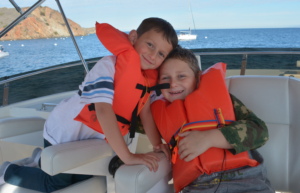
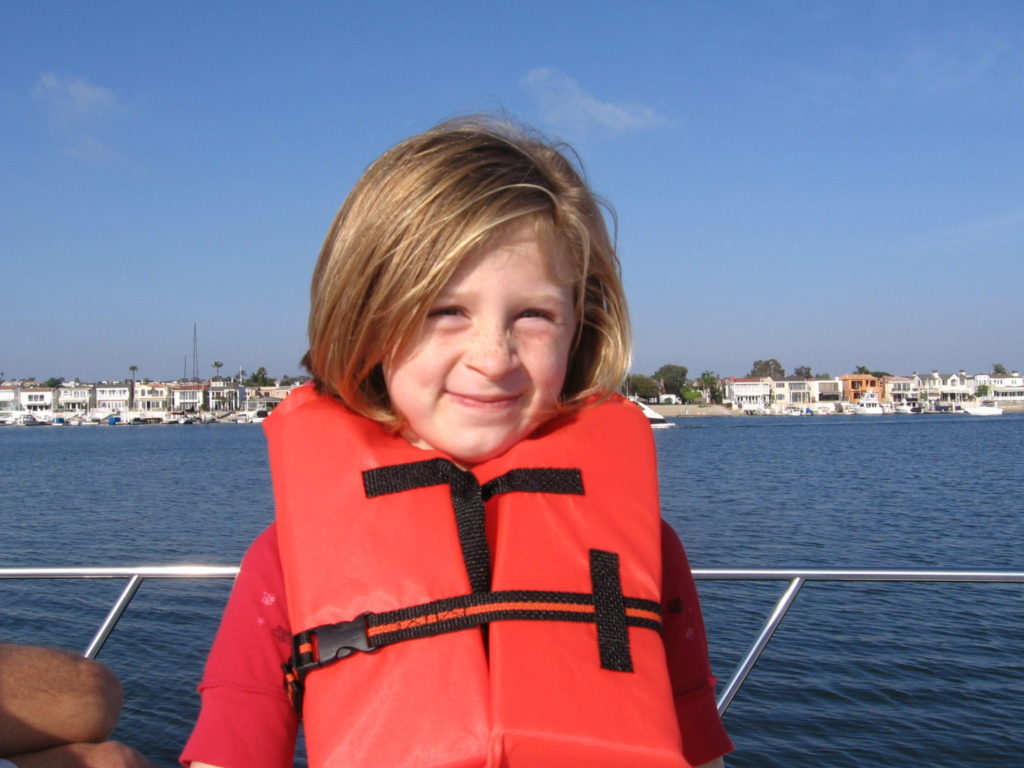
Everybody aboard should wear an age and size-appropriate life jacket, equipped with a whistle and a water activated light, any time they’re at the dock or out on deck. As a matter of fact, in some states anyone under 13 MUST wear a life jacket the moment they step onto the dock. Kids might rebel at the thought, but if the adults set the example, over time the kids will get into the habit. No exceptions. Remind kids that if they fall overboard, need help, or experience an emergency or accident, they should blow the whistle until help arrives.
● Electrical Systems.
While your Offshore Yacht can be surprisingly kid friendly, its electrical panel, battery-selector switches, and electrical outlets may not be. Teach children that flipped switches can turn off important systems, or damage pumps and electronics. If you’re cruising with young children, consider installing a lock and key for your electrical panel so little fingers cannot access it. Make sure you protect every electrical outlet with a ground-fault circuit interrupter (GFCI).
● Emergency Procedures
Before you leave the dock, conduct an “age appropriate” safety drill. Show kids their lifejackets, practice putting them on, and indicate where to keep them when they’re not wearing them. Instruct them about what to do if they are injured, smell smoke, or see someone have an accident. You can show older kids where the fire extinguishers, first aid kit, and other emergency equipment is stowed. Once you’re out at anchor, practice “man overboard” and other safety drills. Teach the kids how to use the VHF radio responsibly in the event of an emergency.
● Navigation and Operation Basics.
Establish a safe place to send younger kids while line handling, docking, anchoring, and rough weather.
If you’re letting young passengers take the helm or operate the tender, make sure they know and understand the basics of navigation and rules of the road. If your tender has an outboard, insist your young operators wear the “dead man’s lanyard” around their wrist.
● Boat Rules
A few basic rules can make all the difference in the safety of everyone aboard. Here are a few to consider adding to your own routine:
- Nobody sits on the bow or hangs their legs over the side while underway. It’s dangerous, and even illegal in some states.
- Nobody goes out on deck at night or during docking and anchoring without permission. Younger kids should stay in their safe place at such times.
- Nobody plays on the ladders, in the companionways, or on the stairs.
- Nobody throws anything over the side – no bottles, cans, paper trash, food waste, or plastic.
- One last Safety Tip
To save your sanity and make boating as pleasant an experience as possible for your little guests, go over all of the rules and procedures before you get out on the water, rather than having to chase little ones around yelling, “no, no, no,” and “don’t touch that!” all day long. Both you and your little guests will have a much better time.
Once everybody’s clear on what good boat behavior means, it’s time to throw the lines off and have fun with the kids. Let’s look at ways to keep three groups of kids entertained.
Offshore Yacht Kids Under 6 Years Old
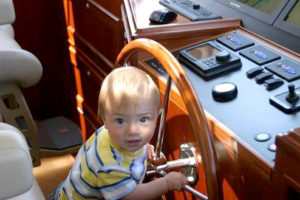
- Devote one area of your Offshore yacht as a safe and comfortable space to hang out. Fill it with toys, books, and games. A bonus idea is to make these toys, books, and games available ONLY on the boat, so the children look forward to entertaining themselves with them. Suggestions include ocean- or boat-themed toys that can help them learn about the sea, marine creatures, and boat life.
- Swim, wade, or just play in the water with them. If your child has the benefit of early swimming lessons, you can let them swim from the swim step, as long as you monitor them and make sure they don’t stray far from the boat. If your child doesn’t know how to swim, use the opportunity to wade and play in shallow water, or float with you on an inflatable raft or inner tube.
- Take short dinghy or tender rides along the shore, and look for wildlife: birds, fish, crabs, even insects can be fascinating to young children. (For very young children, the operative word is SHORT.)
- Play on the beach. Bring a bucket and shovel and let the children dig, build sandcastles, and burn off energy running along the beach or splashing in the shallows.
Offshore Yacht Kids from 7 to 12 Years Old
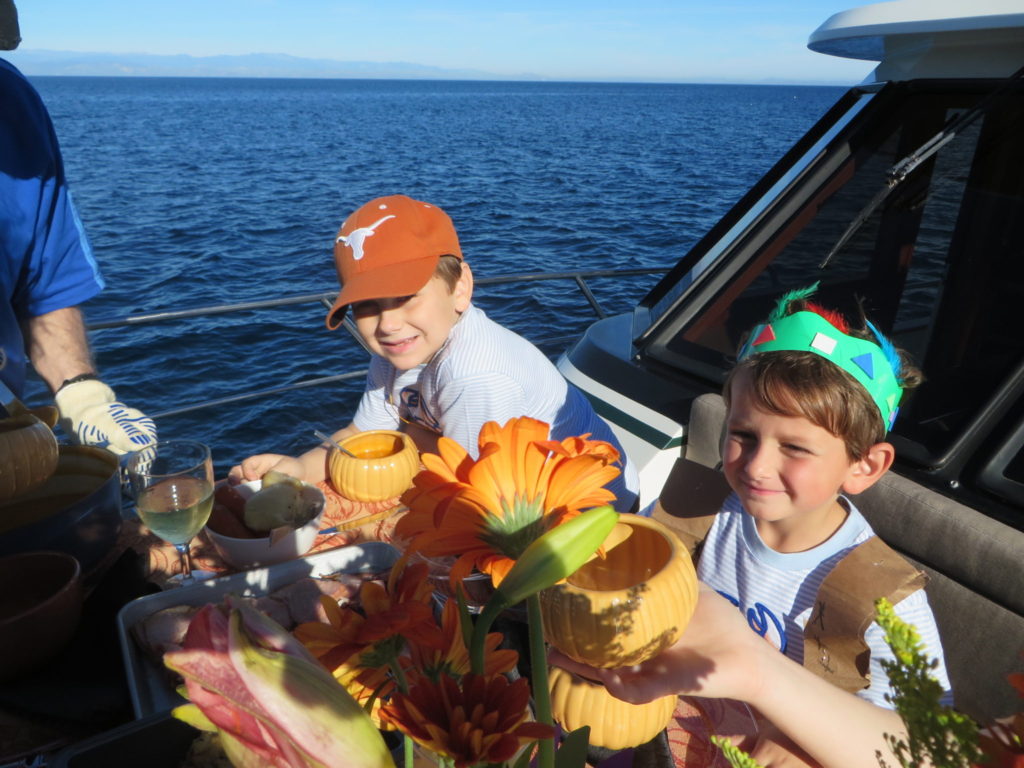
As children get older, they become much more adventurous and are more likely to be interested in the actual operation of the boat. That allows for the possibility of everybody having much more fun. Here are some ways to keep them engaged and entertained.
- Kids from 7 to 12 are more likely to be better swimmers, and much better able to play safely in the water. Consider adding a wetsuit, snorkel and mask, and swim fins, so they can keep themselves entertained for hours.
- Add activities to your time sitting at anchor. Buy a couple of kites to fly off the sun deck or fantail. Issue a wildlife sighting challenge – offer a chart or checklist and have the kids scan the shoreline or horizon for different birds, marine mammals, and fish. Add kid-friendly marine themed books and movies to your onboard library, and encourage your young guests to learn about their environment.
- Teach the kids how to navigate by letting them direct where you’ll be going. Show them how to work your chart plotter or teach them how to plot the course using paper charts. Have them sit at the wheel with you and explain the basics of the rules of the road, like buoys, channel markers, and boating courtesy.
- Help the kids learn to tie knots that are essential to becoming competent boaters. Give them practice line, cleats, and rings, and assign common knots to learn. As they become competent, allow them to tie the knots you need while underway.
- Give them “crew” chores and responsibilities to encourage them to participate. You might be surprised at how seriously they’ll take feeling like part of the crew. As they get older and more experienced, assign them tasks like setting fenders, handling mooring lines, or stowing gear and preparing for sea.
- Start incorporating active water sports like tubing, kayaking, wake boarding, or water skiing as their skills develop. Heck, get in the water with them! You can assign “skier down” duties to younger kids.
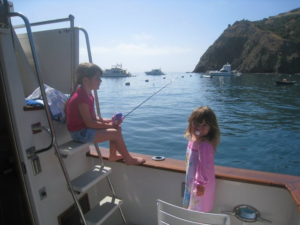
- Teach the kids to fish, by providing kid-sized poles. Show them how to choose a lure, bait a hook, and identify what they’ve caught.
Offshore Teens 13 Years and Older
While living with teenagers can be a challenge, they’re remarkably able to entertain themselves on the boat, and more inclined to just be out on the water enjoying the boat.
- Involve teens in navigation. If your teen has a boating license, allow them (under your supervision) to be captain for the day. That will help them learn essential boating skills that can make them valuable crew for you. Check the requirements in your state to see how your teen can earn their boating license.
- Provide opportunities for more skilled watersports. Wakeboarding, water skiing, and wake surfing offer some of the most fun you can have on the boat. And if your teens can include their friends on a cruise, crank up their own music, and burn off some of that teenage energy, it’ll be hard to keep yourself from joining in!
- Involve your teen in SCUBA diving, especially if they’ve shown a keen interest in snorkeling. If you’ve never been diving, consider taking a course and getting certified alongside your teen so you can share the remarkable experiences available under the surface.
- Make sure you’ve got plenty of games onboard – a deck of cards or two, backgammon, dominos, or any popular board game (Battleship?) can help them have fun when they’re too sunburnt or too cold to stay outdoors.
- Fish, fish, and fish. Teens are old enough for serious, adult-side fishing gear. Equip them with the right pole, reel, lures, and tackle to join you out on the tender trolling the shallows or bottom fishing from the deck.
Most of us at Offshore West grew up around boats and out on the water. If you’re looking for creative, inventive ways to involve your kids or grandkids in your Offshore Yachting experience, we’d love to share what we’ve learned.
Just give us a call, or better yet, drop by our Newport Beach office for a chat.
And if you have ideas, photos, and stories about how you’ve involved your young guests on your Offshore Yacht, we’d love to hear about it – and share it with our Offshore family.
